
By Ben Wright (@Iamzavagno | www.xgeeks.co.uk)
This review is spoiler-free.
Netflix and Studio Mir have teamed up once more – this time to reimagine Capcom’s iconic Devil May Cry franchise – and the result is a bold, slick, and surprisingly emotional adaptation that hits all the right notes.
As someone familiar with the games, I think it’s worth pointing out that this is a fresh take on the Devil May Cry universe. The show is set within the same world and features familiar faces, but it isn’t afraid to chart its own course. There’s a heavier political slant to the narrative, and while some character arcs and story beats stray from the source material, it works. Treat it as its own thing – rather than constantly holding it up to past DMC titles – and you’ll likely have a fantastic time.
The series wastes no time establishing its bold tone, though it takes an episode or two to settle into its groove. Once it finds its rhythm, it delivers a compelling mix of character-driven drama and gloriously over-the-top action. The emotional investment pays off thanks to solid writing and well-paced exposition, making it accessible to both long-time fans and newcomers. And yes – Episode 6 is bound to stir up conversation (we’ll get to that).
The voice cast is exceptional. Johnny Yong Bosch takes on the role of Dante, bringing swagger, wit, and a surprising amount of emotional nuance. Having previously voiced Nero in the game series, Bosch is no stranger to the franchise, and his performance here feels effortless and on point. Hoon Lee delivers a captivating turn as White Rabbit – intense, magnetic, and utterly mesmerising. Meanwhile, Scout Taylor-Compton brings a grounded, stoic energy to Mary (aka Lady), offering a nice contrast to Dante’s flamboyant style.
And then there’s Kevin Conroy. Hearing him once again—this time as Vice President Baines – was genuinely moving. He brings a sinister charisma to the role that only he could, and knowing this is one of his final performances gives his scenes an added emotional weight. A legend, through and through.
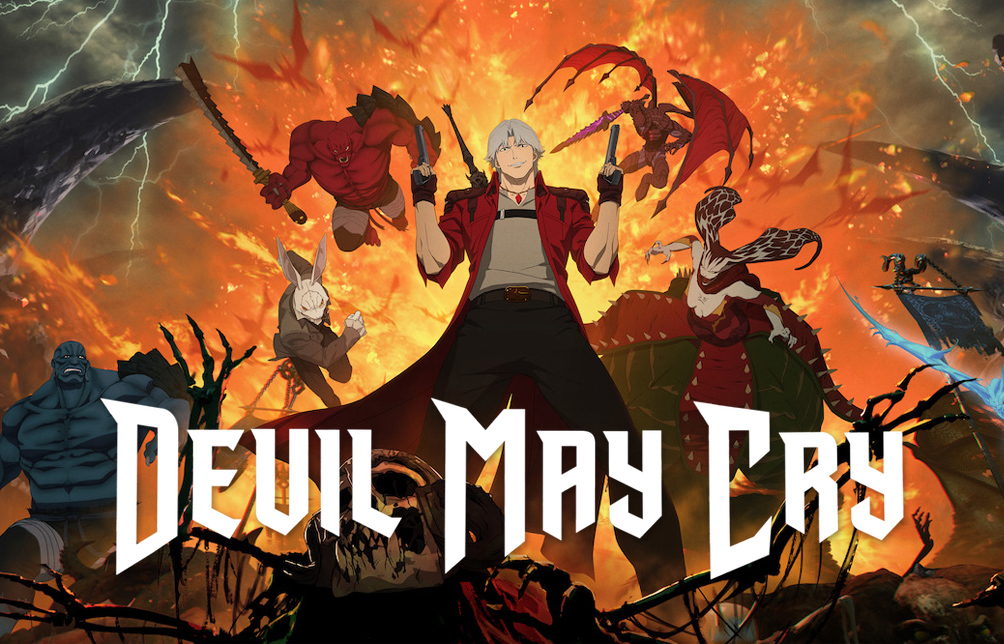
Visually, the show is everything you’d expect from Studio Mir. Their signature mix of 2D and 3D digital animation gives the series a distinct, dynamic look that fits the Devil May Cry aesthetic perfectly. The action scenes are big, loud, and absolutely ridiculous – in the best possible way. But what’s equally impressive is how the studio handles the quieter, more emotional moments with just as much care.
Episode 6, in particular, stands out for its experimental approach. The art style shifts dramatically, which may prove divisive, but it fits the tone of the story being told. It slows the pace of the main narrative, sure, but it adds important backstory and gives one character, in particular, a whole new dimension. Visually striking and emotionally resonant, it’s one of the series’ boldest moves, and for me, it absolutely paid off.
Let’s talk about the soundtrack. It’s a nu-metal lover’s dream. Opening with Limp Bizkit’s “Rollin’ (Air Raid Vehicle),” the tone is set from the get-go: loud, unapologetic, and high-energy. Evanescence delivers a brand-new track, “Afterlife,” while other heavy hitters like Rage Against the Machine, Crazy Town, and Papa Roach make welcome appearances – Papa Roach, in particular, scoring my favourite action sequence of the series. And then there’s the finale, which features a track from my all-time favourite band, Green Day. I won’t spoil the song – it ties too closely to the ending – but let’s just say it lands with real emotional impact.
Devil May Cry: Season One is visually stunning, wildly entertaining, and full of heart. It manages to honour the spirit of the games while confidently doing its own thing—and it absolutely works. With an excellent voice cast, top-tier animation, and an unashamedly fun soundtrack, this is a hell of a debut. Fans and newcomers alike are in for a wild ride.
 X-Geeks