
By Ben Wright (@Iamzavagno | www.xgeeks.co.uk)
This review is spoiler-free.
After the emotional pummelling of 28 Years Later, followed by that absolutely wild ending, the hype was very real for the follow-up, 28 Years Later: The Bone Temple. It is safe to say it delivers, although not quite in the way I initially imagined.
Taking over directorial duties is Nia DaCosta, who brings a distinctive voice to the franchise while still delivering a film that feels thematically and aesthetically at home in this world. Her approach is clearly different from Danny Boyle’s, and that difference is immediately noticeable, but it never feels jarring. Instead, her confident and controlled hand ensures the film never drifts into danger. Knowing this is intended to be part of a planned trilogy, DaCosta wisely focuses on mood, character and meaning rather than escalation for the sake of it.
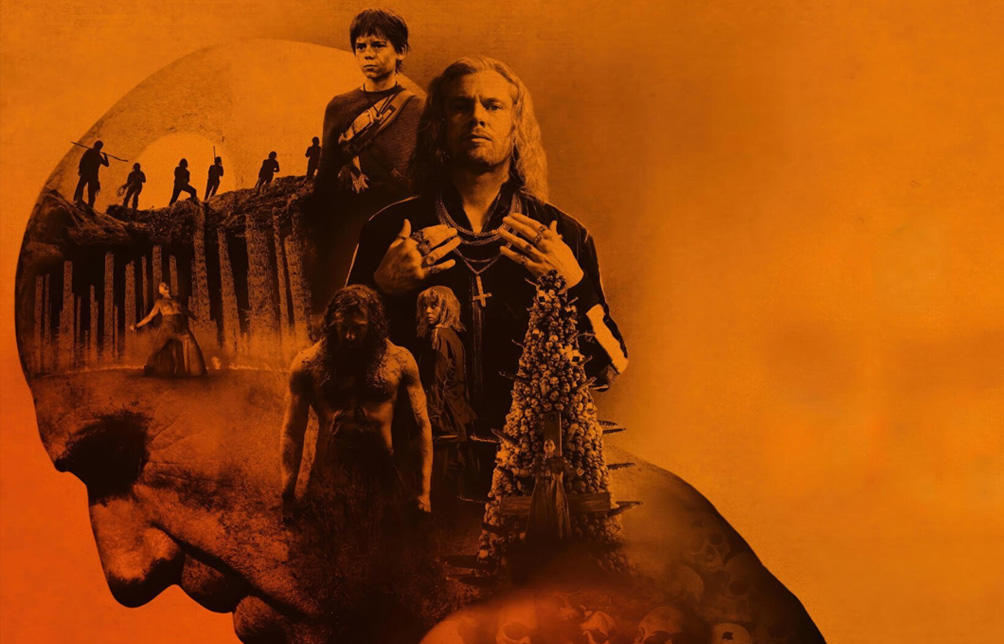
The Bone Temple is a far more stripped back offering than its predecessor. It refines its focus and centres primarily on two main characters, three if you include Samson, although he feels closely tied to the Kelson storyline rather than operating independently. The world feels smaller and more intimate, yet paradoxically, the possibilities for a third film feel limitless thanks to the revelations scattered throughout the narrative. This is a film that will undoubtedly divide opinion, much in the way The Last Jedi did. Some will praise its willingness to push beyond the familiar framework of an established franchise, while others may feel it strays too far from what they originally loved. I firmly fall into the former camp.
Alex Garland deserves significant praise for the screenplay. Rather than treating this as a bridge film filled with spectacle, he leans into character study while continuing to expand the lore and moral complexity of the infected landscape. It is a bold and brave choice, trusting the audience to engage with quieter moments, philosophical ideas and emotional weight. Thanks largely to the performances, this approach pays off when it matters most.
Ralph Fiennes and Jack O’Connell are the undeniable standouts. Both are exceptional individually, but they are at their best when sharing the screen. Fiennes delivers what feels like a near career best performance, understated, chilling and deeply human, all while making it look effortless. There is a calm authority to his presence that draws you in, even when the character’s motivations are unsettling. Jack O’Connell, as Sir Lord Jimmy Crystal, is magnetic. As a Derby lad, I am more than happy to see him receive the praise he deserves, and this role feels like a defining moment. He brings intensity, vulnerability and a quiet menace that lingers long after the credits roll. Jimmy Crystal is a character who will be talked about for years, and for all the right reasons.
Alfie Williams is more of a supporting presence this time around, but his reduced role feels deliberate rather than wasteful. There is a strong sense that he is being positioned for a much larger focus should a third film move forward. Erin Kellyman continues to impress, delivering yet another strong and grounded performance, no matter how much screen time she is given. Chi Lewis Parry’s Alpha Samson has a far greater impact on the story this time, and not just because of the physical presence or prosthetics. His elevation within the narrative leads to one of the film’s most poignant and emotionally resonant moments.
That said, while I greatly appreciated the stripped-back and character-driven approach, the pacing does feel slightly uneven. There are moments where the film could have benefited from a little more presence from the infected, if only to maintain balance and tension. It is not that the film tries to distance itself from its predecessor, but given what was established in 28 Years Later, it could perhaps have delivered a little more of what audiences were expecting.
The soundtrack is nothing short of epic, and there is one particular scene towards the end, you will know it when it happens, that leaves a lasting impression. It is the kind of moment that will be discussed, dissected and debated for a long time to come, both for its emotional impact and its bold creative choices.
As for THAT ending – even if this particular film was not your cup of tea, it will have certainly whet your appetite for a third offering…
28 Years Later: The Bone Temple is a daring, thoughtful and often haunting follow-up that chooses character and atmosphere over spectacle. It may not be for everyone, but for those willing to embrace its quieter confidence and ambition, it is a deeply rewarding chapter in the 28 Years Later story.
 X-Geeks