
By Ben Wright (@Iamzavagno | www.xgeeks.co.uk)
This review is spoiler-free.
Season Two of Fallout continues its journey through a fractured wasteland where the past and present collide. As secrets buried long before the bombs fell begin to surface, familiar faces are pushed to their limits, alliances are tested, and the consequences of long forgotten decisions ripple across the ruins of civilisation. Balancing dark humour, brutal violence and heartfelt character work, the series deepens its mythology while setting the stage for what lies ahead.
The season builds confidently upon the great work established in the first season, and this time around, the pacing and writing feel noticeably slicker. Any minor teething issues present in season one have clearly been addressed and resolved. Once again, the narrative cuts between the modern-day wasteland and the past, following parallel stories across different time periods that gradually fill in the gaps and unravel the central mysteries with precision. This structure works beautifully on a week-to-week basis, rewarding patience and attention without ever feeling convoluted.
It is that weekly release structure that I enjoyed the most. Each episode delivers the perfect balance of narrative intrigue, action, dark humour and character development, capped off with a stinger that leaves you desperate for the next chapter. The writing this season is confident and assured, fully embracing the tone of Fallout by leaning into fan favourite narrative elements long established in the games. There is a wonderful balance between bleakness and absurdity, where moments of genuine emotional weight sit comfortably alongside biting satire and pitch-black comedy. The dialogue is sharp, often laugh-out-loud funny, but never undercuts the stakes, and the show continues to excel at making the wasteland feel both horrifying and strangely human.
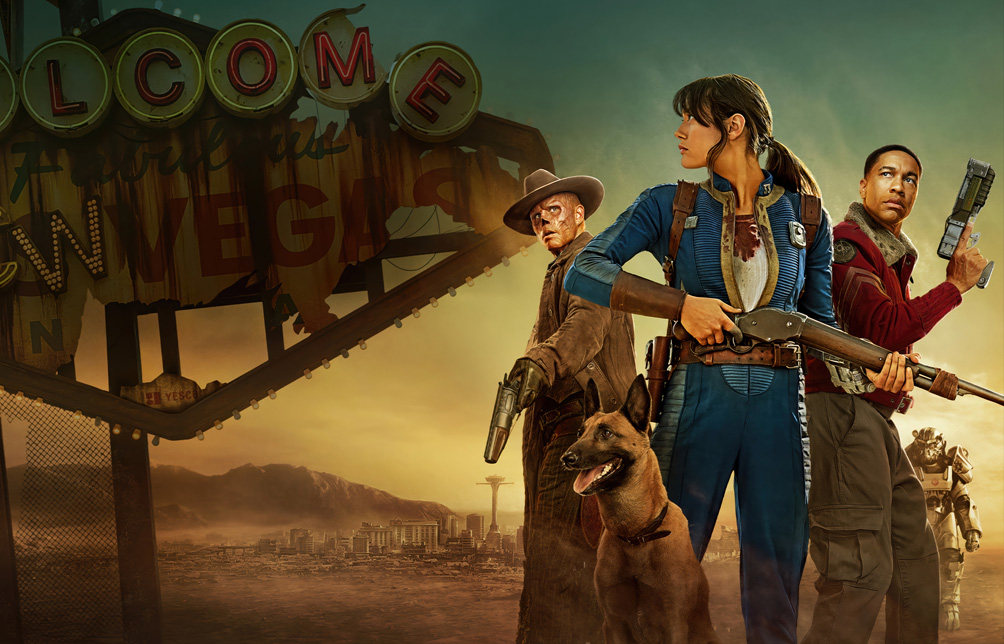
The performances across the board are fantastic, with Ella Purnell, Walton Goggins and Kyle MacLachlan once again leading the charge into New Vegas. Purnell returns as Lucy MacLean, the ever-plucky Vault Dweller, trying to bring hope and positivity into a world that seems determined to crush it out of her. This season pushes Lucy harder than ever before, forcing her to constantly balance her desire to do good with the brutal realities of a morally compromised wasteland. Purnell handles this evolution superbly, nailing both the emotional and comedic beats, and she remains a true standout and shining star of the series.
Walton Goggins continues to ooze his trademark cool as The Ghoul, also known as Cooper Howard. This season represents a significant step forward in his character’s mission to uncover the truth about his family, and Goggins brings a layered performance that mixes menace, vulnerability and dark humour in equal measure. The on-screen chemistry between Goggins and Purnell is excellent and gives the show some of its most engaging moments. Kyle MacLachlan, as Hank MacLean, once again adds that extra bit of stardust that elevates every scene he is in. His journey this season is closely tied to the future direction of the show, and it was a joy to see that arc teased out gradually week by week, adding intrigue and tension with every appearance.
Aaron Moten delivers another strong season as Maximus, featuring in one of the finale’s most goosebump-inducing moments. However, much like Moisés Arias as Norm MacLean, his role is noticeably reduced this time around. Given where the season leaves him, it feels safe to say he will be far more involved next season. The supporting cast also deserves plenty of praise, with Frances Turner, Annabel O’Hagan and Johnny Pemberton all making the most of their screen time. Each brings personality and texture to the world, helping the wasteland feel lived in and unpredictable, even when they are not at the centre of the story.
For fans of the video games, this season will be a huge hit. From obscure deep cut references to outright iconic moments, characters and lore, there is an incredible amount on offer. Whether tucked away quietly in the background or placed front and centre, the easter eggs feel respectful rather than gratuitous. Crucially, the show understands how to translate Fallout from game to television, not by copying it beat for beat, but by capturing its spirit. The retro futurism, the environmental storytelling and the moral ambiguity are all perfectly adapted, and it will almost certainly have viewers rushing to reinstall their favourite Fallout game before the credits have even finished rolling.
There will undoubtedly be plenty of discussion surrounding the season finale, particularly its open-ended nature. Initially, I felt a little unsatisfied, not because of poor writing, but because the season had been so consistently strong that I wanted a greater sense of finality for some of the plot threads. After reflecting on it, I found myself more at peace with how much was left in the air. Critics may argue that while setting up the future is important, a show must still deliver in the here and now. That said, thanks to some fantastic moments, clever easter eggs and strong performances, the finale did more than enough to keep me satisfied until season three. It does not feel like a wasted ending, even if I can understand why some viewers may have wanted more closure.
With standout performances, a clear respect for its video game roots and writing that carries real emotional weight, Fallout Season Two feels like a natural continuation of the series while still standing confidently on its own. It shows exactly how a video game adaptation should work, pairing brutal violence and dark comedy with strong character work, deepening the mythology and setting the stage for what comes next.
 X-Geeks