
By Ben Wright (@Iamzavagno | www.xgeeks.co.uk)
This review is spoiler-free.
We’ve had to wait a while for the Straw Hats to finally make their way towards the Grand Line, but Series 2 wastes absolutely no time reminding us why the journey matters. As Luffy and his crew continue their adventure across ever stranger seas, they encounter bizarre islands, dangerous enemies and new allies, each challenge pushing them closer to the legendary Grand Line while testing the bonds that hold the crew together. It’s a season about momentum, discovery and belief in impossible dreams, and it barrels forward with a confidence that feels completely earned.
Considering the sheer amount of stories and characters the showrunners could have chosen from in this part of the anime source material, I was genuinely shocked by some of the things they decided to include. If you thought the first season leaned into the sheer madness of the anime, you’ve seen nothing yet. This season dives headfirst into the weird and wonderful, the bizarre and gloriously goofy spirit that defines One Piece. And the thing that amazed me most is that the show does this completely unapologetically. Places, character designs and concepts appear here that I never imagined a live-action adaptation would even attempt, let alone pull off so confidently. Yet the series embraces that eccentricity rather than sanding it down. In doing so, it delivers what I would confidently call the best anime-to-live-action adaptation we’ve ever seen.
The show honours the source material beautifully while still shaping it into something that works for television. The narrative is condensed where it needs to be, storylines are streamlined, characters are repositioned, but crucially, the emotional weight, the humour and the sense of adventure remain fully intact. If anything, the tighter storytelling only strengthens the pacing. What’s impressive is that the writers don’t simply adapt the anime beat for beat. They reinterpret it. Certain plotlines and characters are taken in new directions, venturing into uncharted waters that help solidify the live-action series as its own entity rather than just a translation of the anime. The writing really is fantastic. It balances heart and humour with a confidence that few shows manage. One moment you’re laughing at the absurdity of a situation, the next you’re emotionally floored by a character moment. Episodes two and seven in particular absolutely broke me. The emotional devastation in episode seven genuinely surpasses the equivalent moment in the anime, which is not something I ever expected to say.
From a production standpoint, the scale has clearly gone up. The set design this season is phenomenal. Episode three in particular is a huge showcase for this. The show leans far more heavily into physical sets and real ships rather than relying too heavily on green screen, and it makes an enormous difference. Everything feels tangible, lived in and immersive, which only heightens the already impressive storytelling and performances.
The costume department also deserves a standing ovation. The outfits look like they’ve been ripped straight out of the anime, and they are wonderfully wild. Bold colours, exaggerated silhouettes, bizarre details, it’s all here. Yet somehow it never feels silly in a bad way. Instead, it feels playful and imaginative. Our characters also get multiple costume changes throughout the season, just like in the anime, which is a small detail they didn’t have to include, but one that shows the genuine love and respect the creators have for the source material. They honour the anime without letting it become a creative restriction.
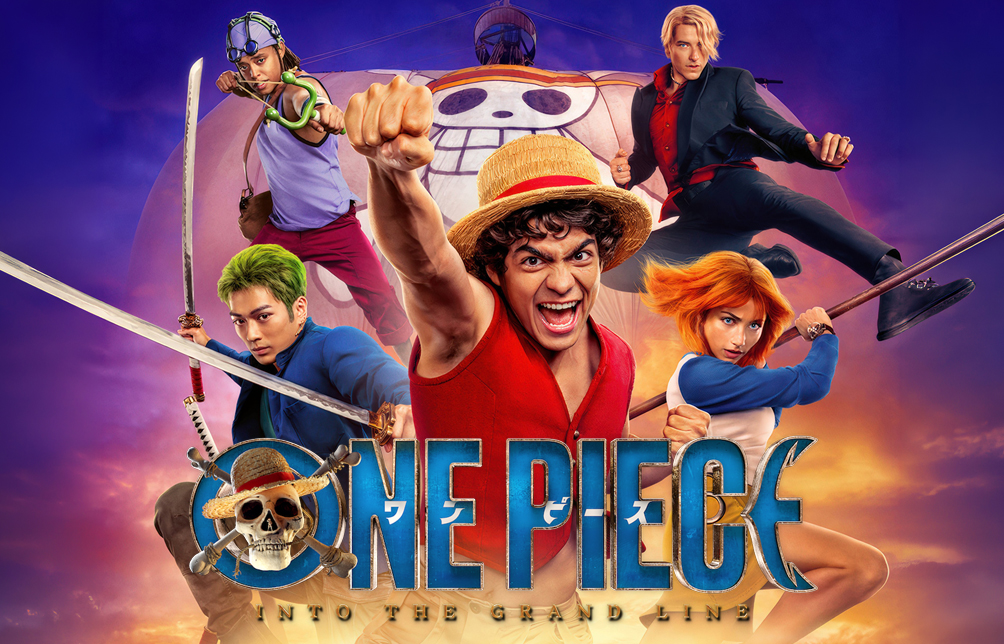
As for the returning cast, the Straw Hat crew continue to be the beating heart of the series. Iñaki Godoy returns as Monkey D. Luffy alongside Emily Rudd as Nami, Mackenyu as Roronoa Zoro, Jacob Romero Gibson as Usopp and Taz Skylar as Sanji. I loved this ensemble in the first season, but here they elevate their performances to an entirely new level. Each character is given moments of reflection and growth, and the actors lean fully into them. Godoy continues to lead the charge with an infectious optimism that perfectly captures Luffy’s unwavering determination. Mackenyu not only delivers the season’s most jaw-dropping action set piece, but also lands the single funniest line delivery in the entire series. It’s a homage to a famous animated moment, and the delivery was so unexpected I nearly did a spit take.
What truly makes this cast special, though, is their chemistry. Their connection to the characters, and to each other, feels completely genuine. It radiates through the screen. The Straw Hats feel like a family, not just in the writing but in the performances. That authenticity is incredibly hard to fake, and this group absolutely nails it.
Joining them are a host of fantastic newcomers. Charithra Chandran appears as Miss Wednesday, David Dastmalchian as Mr. 3, Callum Kerr as Smoker and Julia Rehwald as Tashigi. Chandran’s role was always going to be heavily scrutinised by fans, and I think they absolutely nailed it. The interpretation of the character feels fresh while still respecting the spirit of the original. Dastmalchian, meanwhile, is a deliciously mischievous presence who clearly relishes every second of screen time.
Later in the season, we also meet Katey Sagal as Dr Kureha, Mark Harelik as Dr Hiriluk and Mikaela Hoover as Tony Tony Chopper. Sagal and Harelik have fantastic frenemy energy, fully committing to the eccentricities of their characters. And then of course there’s the reindeer in the room, Tony Tony Chopper. The visual effects are heartbreakingly cute, but Hoover’s voice performance adds so much warmth and charm that the character instantly becomes one of the highlights of the season. He looks fantastic, sounds fantastic, and I cannot wait to see more of him. Other appearances include Sophia Anne Caruso as Miss Goldenweek, Daniel Lasker as Mr. 9, Clive Russell as Crocus, Camrus Johnson as Mr. 5 and Jazzara Jaslyn as Miss Valentine. Not only do they look the part, but Russell and Lasker in particular deliver standout performances.
I mentioned earlier a scene involving Mackenyu’s Zoro, and it comes in episode three. If you’ve read my work before, you’ll know I have a deep appreciation for a well-executed one-shot and carefully crafted fight choreography. What this episode delivers might genuinely be the greatest television sword fight of the past decade. The last time I was this blown away by a TV action sequence was the lightsaber duel in The Acolyte, but this goes even further. The scale, the precision, the sheer endurance of the choreography are astonishing. Mackenyu, the stunt team and the crew deserve enormous respect for what they achieved here. It’s an unrelenting, masterfully constructed sequence that almost risks overshadowing the surrounding plot simply because of how extraordinary it is. I would have been thrilled with ten per cent of what they delivered, so the fact we got the full spectacle is genuinely a gift.
So, the negatives. Surely there must be some? Honestly, I struggled to find anything worth seriously criticising. There is one multi-episode arc based on a storyline I’ve never particularly loved in the anime, but that’s purely personal preference. And even then, the show actually improves on it in several ways. The creative team has done an excellent job trimming down islands, characters and plot threads so that the story moves forward at a strong pace while still preserving the immense scope of the original narrative.
With incredible performances, hugely ambitious production design and one of the greatest sword fights ever committed to television, One Piece Series 2 proves that lightning can strike twice, delivering a bigger, bolder and even more emotionally resonant adventure than its already brilliant first season.
 X-Geeks