
By Ben Wright (@Iamzavagno | www.xgeeks.co.uk)
This review is spoiler-free.
Passenger follows a couple whose late-night journey down a remote stretch of road slowly turns into something increasingly strange and unsettling. What begins as an ordinary trip quickly spirals into paranoia, psychological horror, and disturbing encounters as the pair realise something is deeply wrong long before they fully understand what they are dealing with.
As a big fan of André Øvredal’s earlier work, especially Trollhunter and The Autopsy of Jane Doe, I went into Passenger pretty excited. The trailer sold a genuinely interesting concept and, honestly, Øvredal has already shown before how good he is at building atmosphere inside smaller, contained horror stories. So there was definitely a lot of potential here.
And to be fair, the film starts really strongly. The opening sequence features a brilliant one-shot that immediately pulls you in and sets the tone perfectly. It is tense, unsettling, and just really well directed without feeling like it is showing off. There is another standout moment later involving a stalking sequence across a near-empty car park and, again, it is the sort of scene that reminds you how good Øvredal can be when he is fully leaning into suspense and tension.
And that is what frustrated me most about the film, really, because there are moments where you can clearly see a much better horror film trying to break through.
When Øvredal gets the space to properly build atmosphere, the film genuinely works. Some of the quieter scenes were honestly creepier than the bigger horror moments. There is this uneasy feeling hanging over parts of the film that keeps you on edge without needing loads of jump scares or gore flying at the screen every five minutes. But at the same time, it often feels like the script, written by Zachary Donohue and T.W. Burgess, keeps dragging things back towards much safer and more familiar horror territory.
And that is where the film slowly started losing me a bit.
Passenger is not bad at all. In fact, I think “pretty decent” is probably the fairest way to describe it. The problem is that there are ideas here that feel far stranger and more interesting than the film fully commits to. Early on, there is this weird dreamlike feeling to the endless road and the looping isolation, like the characters are trapped inside something they cannot quite escape from. Honestly, I wish the film had pushed much harder into that side of things because those moments were easily the strongest parts for me.
Instead, it slowly drifts into much more familiar horror territory as it goes on. By the final act, especially, it almost feels like the film stops trusting its stranger ideas. Weirdly, parts of the ending genuinely reminded me of an old episode of Supernatural. And I do not mean that as an insult, either, because I love Supernatural. It is more that Passenger suddenly starts feeling smaller and more predictable than the setup originally promised.
Performance-wise, Lou Llobell and Jacob Scipio are both perfectly solid individually. Neither gives a bad performance at all. The bigger issue is that the relationship between the two characters never fully clicks emotionally, and I honestly think that comes more from the writing than the actors themselves. A lot of the dialogue between them feels a little stiff at times, which makes it harder to fully invest once the emotional side of the story becomes more important. That said, there are still scenes where both actors show glimpses of something stronger underneath the surface. It just never quite comes together consistently enough.
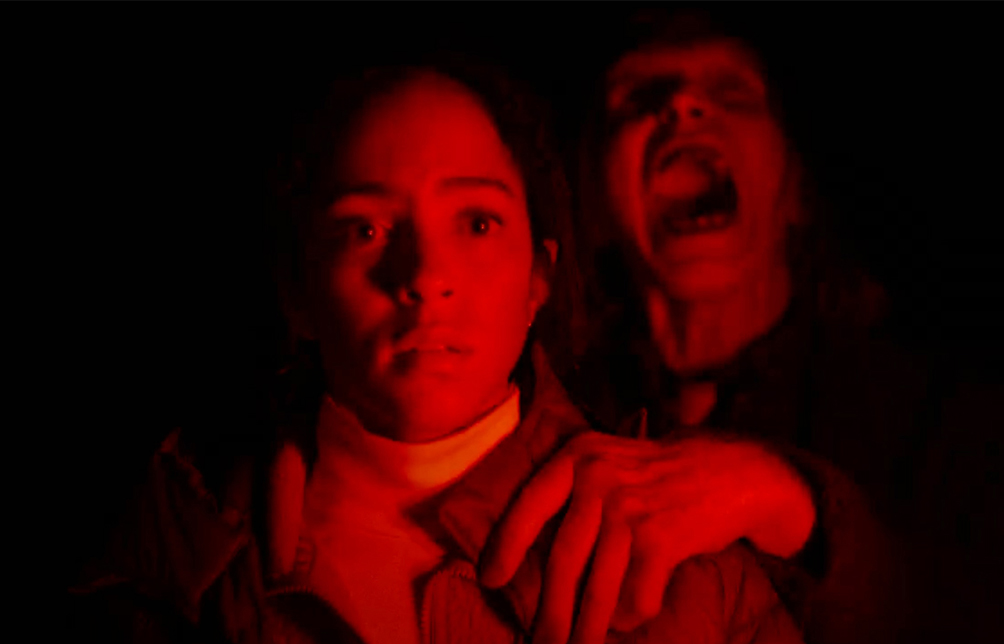
The film does look great, though. Øvredal still knows exactly how to use darkness properly without making everything impossible to see. The nighttime road scenes especially have a really unsettling atmosphere to them, and the sound design does a lot to keep that tension bubbling away in the background during the quieter moments.
I also appreciated that the film does not rely too heavily on cheap jump scares. There are a few throughout, obviously, but it works much better when it leans into atmosphere, uncertainty, and that lingering sense that something feels “off”.
Passenger gets frustrating at times because you can see flashes of a much stranger and creepier film underneath it all. Still, the atmosphere works, a couple of sequences genuinely stick with you, and André Øvredal keeps things watchable even when the story drifts into more familiar territory. It hits a few bumps in the road along the way, but never fully veers off course and still makes for an enjoyable late-night horror ride.

